 DUMOGA BONE NATIONAL PARK
BOGANI NANI WARTABONE NATIONAL PARK
The Bogani Nani National Park (BNWNP), located in the northern arm of the island of Sulawesi, is the largest protected area (287,115 ha) within Sulawesi and the single most important site for conserving Sulawesi’s unique and rich terrestrial flora and fauna. The lowland rain forest covering 60% of the park is floristically the most diverse in Sulawesi providing habitats for a large number of endemics. The park is a home for globally threatened species include anoa, babirusa, 3 species of macaques, and 19 globally threatened bird species. Bogani Nani Wartabone National Park, formerly known as Dumoga Bone, is an area of ecological uniqueness. Its is located in the transitional zone between the Indo-Malayan geographical zone in the western part and the Papua-Australian geographical zone in the eastern part (the Wallaceae Area). Several peculiar and endangered species of plant inhabit this Park, including the matayangan palm (Pholidocarpus ihur), black wood (Diospyros celebica), iron wood (Intsia spp.), yellow wood (Arcangelisia flava), and carrion flower (Amorphophallus companulatus). The most commonly found species are Piper aduncum, Trema orientalis, Macaranga sp., cempaka, agathis, kenanga, and various species of orchid and ornamental plants.
BOGANI NANI WARTABONE BIRDING DISCOVERY 7D/6N
Day 01 : Manado – Dumoga Bone Arrival in Manado, meet with your guide then direct drive (5-6 hours) to Dumoga Bone. Lunch enroute. Later after arrive in Kosinggolan check-in at Tante Mien homestay and dinner. (L, D) Day 02 : Dumoga Bone Birding Morning and afternoon birding around Kasinggolan. (B, L, D).
Early morning drive to Tambun for Maleo Birds and others. Afternoon birding around Tapak Kulintang. (B, L, D). Day 04 : Dumoga Bone – Tomohon Drive a half hour to Danau Moat then birding in the forest to the summit of Gunung Ambang. Lunch at the local restaurant after lunch continue drive around 5 hours to Tomohon. Late afternoon arrive in Tomohon, check-in a resort and dinner. (B, L, D).
Fullday birding around Minahasa
highlands includes hike up to volcano mountain and visit Lake Tondano and Lake
Linow. Lunch at the hotel restaurant. (B, L, D). After breakfast and we will transfer you to Manado or to the airport for your next destination. (B)
HALMAHERA BIRDING TOUR Halmahera is the right island to see one of the most exotic Bird of Paradise in the Wallacea region – the Standardwing Bird of Paradise. We can also watch this fascinating bird at the leg display site including Moluccan Scops-owl, Moluccan Owlet-nightjar, Eclectus Parrot, Chattering Lory, White Cockatoo, Moluccan King Parrot with hope Drummer Rail, Blyth’s Hornbill, Golden Bulbul, Common Golden Whistler, Dusky-brown Oriole, Dusky Scrubfowl, Moluccan Scrubfowl, Variable Goshawk, Moluccan Goshawk, Blue-and-white Kingfisher, Common Paradise and Sombre Kingfishers, Long-billed Crow, Metalic Starling, Moluccan Cucoo-shrike, and many more including Ivory-breasted Pitta.
LORELINDU NATIONAL PARK Sulawesi has a total bird count of 350 species, with 4 categories classified: residents 127, endemic 88, migrants 97, and counted as residents or migrants 32. These numbers exclude Sangihe and Talaud, Banggai and Sula islands. Sangihe has 3 endemics, Talaud has 2 endemics, and Banggai has 2 endemics. From the 88 endemic birds of the island, Lore Lindu National Park has the highest number with c. 72, Dumoga Bone 51, and Tangkoko 38 species. Two or three other endemic birds are found in South Sulawesi.
LORE LINDU NATIONAL PARK BIRDING DISCOVERY 7D/6N
Day 1:
PALU-LORE LINDU NATIONAL PARK. Day
2: LORE LINDU NATIONAL PARK. Day
3: LORE LINDU NATIONAL PARK. Day
4: LORE LINDU NATIONAL PARK. Day
5: LORE LINDU NATIONAL PARK. Day
6: LORE LINDU NATIONAL PARK – PALU
Talaud islands, Indonesia The
best birding is on the largest island, Karakelang, using the capital Beo as a
base. Catch the ferry direct to Beo; if travelling on the PELNI ferry to
Lirung, catch a connecting boat or bus, otherwise the ferries all call in at
Beo. On arrival, contact the Beo PHPA officers who guard the 22,000 ha hunting
reserve in the centre of the island; the office is a short walk from Beo
harbour. The officers will arrange accommodation in a local house, whilst food
and other supplies are available at Beo market. Almost all of Talaud's best
birds can be seen in the plantations and forest to the south of Beo: simply
follow the road. To enter the reserve and enjoy some excellent forest birding
negotiate with the PHPA. Recommended sites include Lobo, Awit and Rae: trek
inland for a day from these villages and set up camp. Away from the forest,
migrant waders and other shorebirds are often seen around the coast and
seabirds are seasonally numerous offshore. Rails are heard regularly in marshy areas, a good site is just south of Beo; Buff-banded Rail Gallirallus philippensis, Plain Bush-hen Amaurornis olivacea, White-breasted Waterhen A. phoenicurus and Purple Swamphen Porphyrio porphyrio have been observed, but perhaps most interesting is the newly described Talaud Rail Gymnocrex talaudensis (local name: tu-a). This species can be seen from the road, but all although the most fortunate observers will need much time and patience to see this very shy bird. Three species of swiftlet are believed resident on Talaud: Moluccan and Glossy Swiftlet are common and there are unconfirmed records of Uniform Swiftlet Aerodramus . Of the five kingfisher species, Common Kingfisher Alcedo atthis is found along rivers and in coastal areas; Ruddy Kingfisher Halcyon coromanda occurs in forest and plantations, especially in winter; Sacred Kingfisher Todiramphus sancta is a regular migrant visitor; and Collared Kingfisher T. chloris is common in coastal habitats and plantations. Of most interest to the visiting birder will be the intriguing endemic Talaud Kingfisher T. enigma (local name: sieeta hutan) which can be found easily in forested areas. Often seen along rivers or perched in the mid-storey, it differs from the very similar Collared Kingfisher not only in its choice of habitat, but also by its smaller size and shorter bill and tail. Karakelang now supports the only viable population of the Red-and-blue Lory (local names: sampiri/luring) which is still common on the island, especially in the north, but is threatened by habitat loss and trapping. Other parrots are common in forest, but occur in plantations too, including Golden-mantled Racquet-tail Prioniturus platurus, the endangered Blue-naped Parrot Tanygnathus lucionensis, Azure-rumped Parrot and Great-billed Parrot: Talaud is the only place in the world where three Tanygnathus parrot species co-exist. Four species of Ducula pigeon can be seen: Green Imperial Pigeon D. aenea and Blue-tailed Imperial Pigeon are very common in forest; the threatened small-island specialist, Grey Imperial Pigeon D. pickeringii is uncommon, but most records have come from secondary forest south of Beo; the fourth species, Pied Imperial Pigeon, is rare. Common species in both plantations and forest include the following, all represented by endemic subspecies: Sulawesi Cicadabird, Rufous Paradise-flycatcher Terpsiphone cinnamomea, Grey-sided Flowerpecker, Black Sunbird, Everett's White-eye Zosterops everetti, Asian Glossy Starling Aplonis panayensis and Black-naped Oriole. Another small island specialist, the Island Monarch Monarcha cinerascens seems to be restricted to forest, where pairs and small groups are noisy and conspicuous. Along coasts Pacific Reef Egret Egretta sacra, Malaysian Plover Charadrius peronii and White-bellied Sea Eagle are all resident, whilst Lesser Sand Plover C. mongolus and Greater Sand Plover C. leschenaultii are both regular in winter; in all, nineteen species of wader have been recorded. Other winter visitors to the islands include von Schrenck's Bittern Ixobrychus eurhythmus, Grey-faced Buzzard Butastur indicus, Brown Shrike Lanius cristatus, Blue Rock Thrush Monticola solitarius, Gray's Warbler Locustella fasciolata, Arctic Warbler Phylloscopus borealis and Grey-streaked Flycatcher Muscicapa griseisticta. Many passage migrants pass through Talaud and noteworthy species recorded to date include Oriental Pratincole Glareola maldivarum, Fork-tailed Swift Apus pacificus, Pechora Pipit Anthus gustavi and Red-throated Pipit A. cervinus. The waters around the islands can produce interesting seabird records, with Wilson's Petrel Oceanites oceanicus, Black-headed Gull Larus ridibundus, Brown Noddy Anous stolidus and Black Noddy A. minutus seen in recent years.
TANGKOKO NATIONAL PARK Tangkoko National Park is a flora and fauna conservation area in Mount Tangkoko, Bitung, North Sulawesi province. To visit this park, you will pass Batuputih Natural Park located between Batuputih Bawah subdistrict and Tangkoko National Park in Batuangus. Batuputih Natural Park covering 615 hectares land is a savanna suitable for camping, outbound activities and relaxation by beach sides. Since it is frequently visited by tourists, this Park is the most famous one whereas it is only one of four conservation areas in Tangkoko. In addition Batuputih Park, Tangkoko also has Tangkoko National Park-Batuangus with a total area of 3,196 hectares (covering Mount Tangkoko-Batuangus and its surrounding areas), Duasudara National Park with a total area of 4,299 hectares (covering Mount Duasudara and its surrounding areas), and Batuangus National Park with 635 hectares (located between Tangkoko National Park and Pinangunian village).
BIRDING TOURS IN TANGKOKO 3DAYS – 02
NIGHTS
Day 01 : Manado Tangkoko Arrival in Manado, meet with your guide then transfer to Tangkoko for check-in a losmen. Meeting sevice and dinner. (LD)
Two fullday to explore the birding in the Tangkoko Nature Reserve and here you will be accompanied by bird-watching guide who has sharp eyes to spot the birds and has talent for birding. (BLD)
After breakfast and direct transfer to the airport for your next destination. (B)
Call us today for any inquiry or booking : PT. METROPOLE EXPRESS TOURS &
TRAVEL Mobile : +62-813-560-64-234 (SMS Reservation)
|
|||||
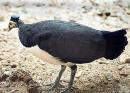 Maleo Bird 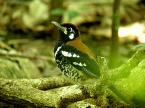 |
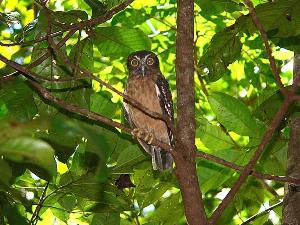 Manguni Bird (OWL) 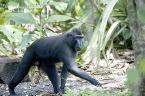 " Black Macaca Nigra From Tangkoko Nature Reserve" |
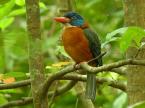 King Fish Bird 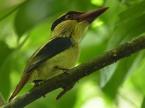 Raja Udang (King Fisher Bird) |
|||
